
Costa Rica for Nature Photographers: Habitats, Wildlife and Photographic Possibilities
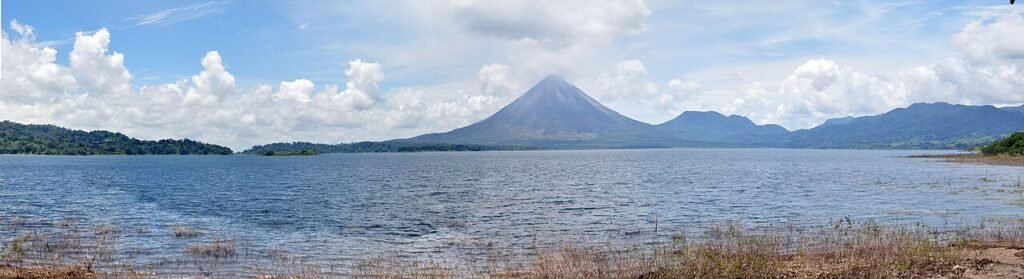
Featured photo: Arenal Volcano and Lake Arenal by Kamran Saraf, CC BY 3.0. Resized; thumbnails may be cropped. The photograph remains available under this license.
Costa Rica offers nature photographers a varied set of environments to explore: humid lowland forest, mountain forest, seasonal woodland, wetlands and coastal settings. The opportunity is to connect those places with your own visual interests. A well-paced route can move between birds, wildlife behavior, forest atmosphere and close detail without making every day a race to a new destination.
According to the Costa Rica Tourism Board (ICT), Costa Rica’s natural environments span rainforests, dry forests, volcanic mountains and Pacific and Caribbean beaches. SINAC’s official map library adds geographic context through forest, wetland, mangrove and protected-area maps. Together, these sources provide a grounded starting point for comparing photographic settings.
Begin with the photographs you want to explore
Think about your preferred stories before selecting hotels or filling a species list. Do you want a quiet forest portfolio, birds in flight, intimate details or a mixture? Your answer helps decide the bases, time in each place and kind of guiding. It also makes room for the unexpected subjects that often give a trip its character.
Use this guide as a starting point. The ten articles below explain Costa Rica’s natural variety from different photographic perspectives, then connect you with regional and accommodation guides.
Habitats, biodiversity and changing light
Costa Rica’s Habitats: A Photographer’s Guide compares the settings that change your subjects, backgrounds and working conditions. Why Costa Rica Belongs on a Nature Photographer’s Travel List explains how that variety can support a personal photographic project, rather than a checklist of stops.
Photographing Costa Rica’s Microclimates: Light, Mist and Rain turns weather into a planning question. Mountain orientation, elevation and coastal influence help create contrasts, while each actual session still depends on current conditions. Leave time for a second attempt at your highest-priority place.
The Cornell Lab of Ornithology identifies eBird as a source of observation-based range maps and regional species lists. Pair that information with habitat and season research. A country-level bird record offers evidence of occurrence, not a promise of a photograph.
Birds and the geography of movement
Bird Photography in Costa Rica: Beyond the Species Checklist helps you define portraits, behavior, flight and environmental images. Bird Migration in Costa Rica: Planning for Migrants and Raptors distinguishes migratory passage from seasonal residence and explains why species, routes and current information matter more than one generic migration date.
Country-level richness creates possibilities, but a national checklist cannot predict the birds at one viewpoint or how close they will be. Treat target species as interests to plan around, with realistic expectations and a flexible approach.
Two coasts and a regional natural identity
Two Coasts, Different Stories: Photographing Costa Rica’s Pacific and Caribbean compares the Pacific and Caribbean without treating either as a uniform habitat. The Caribbean Sea is part of the Atlantic system; the actual region and viewpoint help define the photographs you can explore.
Endemic and Regional Wildlife: Photographing Costa Rica’s Natural Identity distinguishes species restricted to the country from those shared with a neighboring region. Honest range descriptions make your captions stronger, while habitat gives even widespread wildlife a clear sense of place.
National Geographic’s Untamed: Costa Rica series explores wildlife behavior across birds, mammals, amphibians and marine life. Your own story can also work across scales, from a broad setting to an intimate detail, while remaining rooted in what you actually observe.
Look closely and observe patiently
Costa Rica Up Close: Plants, Insects and the Art of Macro Photography explores form, texture and small-scale relationships. Wildlife Photography in Costa Rica: Behavior, Habitat and Patience focuses on wildlife observation before the shutter: understanding an encounter, choosing a frame and letting the animal’s behavior guide your session.
A broad scene, an environmental portrait and a close detail can belong to one coherent story. You do not need to force an encounter or move a subject to create variety.
Protected places and responsible access
Costa Rica’s National Parks and Protected Areas: A Photography Planning Guide helps you compare management categories, visitor conditions and photographic goals. Confirm current rules before designing a session around special hours, particular trails or equipment.
Turn the natural story into a route
Use the guide to Costa Rica photography regions and areas to choose practical bases. Then compare hotels and lodges for photographers by proximity, comfort and the outings they support. Several nights at a suitable base often leave more room for observation than a long series of transfers.
Frequently asked questions
Is this guide only for bird photographers?
No. It brings together wildlife, forest scenes, plants, insects, weather and coastal environments, with birds as one part of the story.
How should I choose my first region?
Start with the habitat and photographic style you value most, then compare access, travel time and suitable accommodation.
Should I add every environment to one trip?
No. Choose a manageable set of contrasts and preserve time for repeated field sessions.
Can good planning guarantee target species?
No. It can improve the fit between your interests, habitat and access, while keeping expectations realistic and animals undisturbed.
Natural environment references: SINAC ecosystem maps and Instituto Meteorológico Nacional climate atlas.
Choose practical bases for a varied photographic journey
Costa Rica nature photography becomes more manageable when the national story is translated into a small number of purposeful stays. Choose a first base for the habitat that matters most to you, then add a contrasting setting. Avoid counting destinations as a measure of the trip’s success: time to observe and return to a location often matters more.
Compare the Dota highlands, Sarapiquí forest and Caño Negro wetlands. These directories connect planning context with published provider profiles. For a different regional story, explore Osa or the Los Santos highlands.
Give each stay a different intention: habitat context, patient bird observation, wildlife behavior or small details. A useful route leaves room to change the subject when conditions change. It also allows companions’ interests and walking preferences to be considered before the daily program is filled.
Continue with our year-round photography planning guide and ideas for a second photography trip. These are planning perspectives, not promises about weather or encounters.