
Wildlife Photography in Costa Rica: Behavior, Habitat and Patience
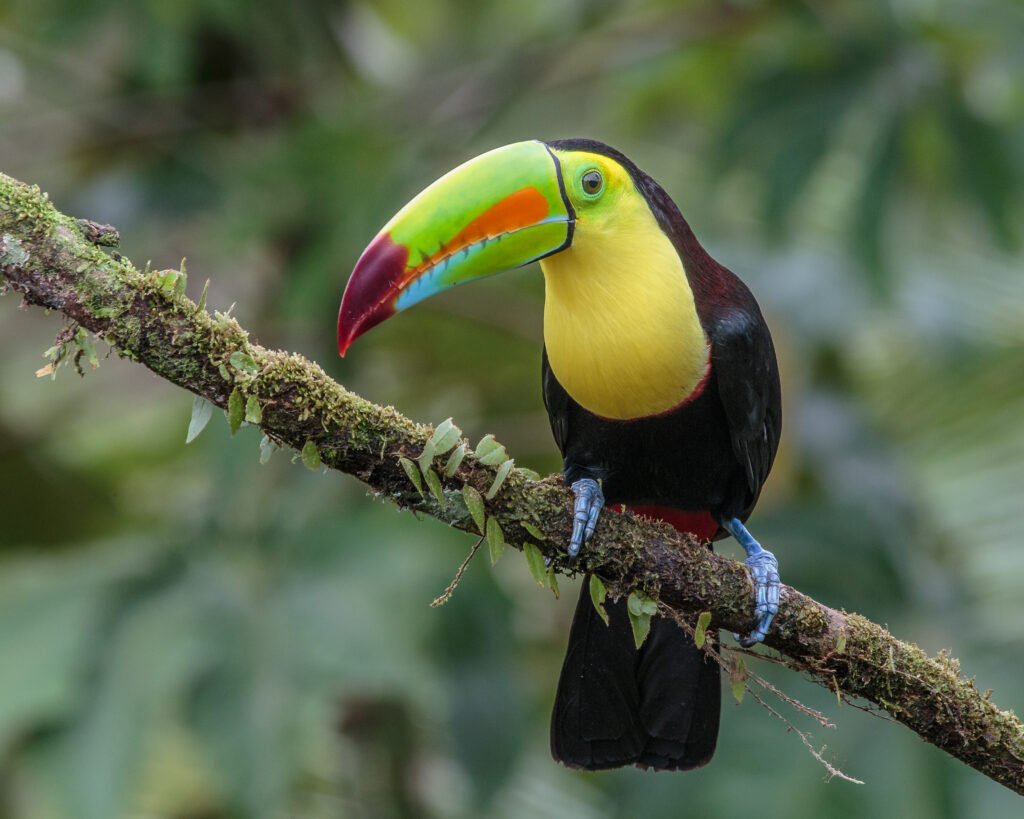
Featured photo: Keel-billed toucan in Costa Rica by Andy Morffew, CC BY 2.0. Resized; thumbnails may be cropped.
Wildlife photography in Costa Rica is most satisfying when you give an encounter time to develop. A portrait can show an animal’s appearance; behavior and habitat can reveal how it lives. The starting point is observation, with enough patience to understand what is happening and enough restraint to avoid changing it for the camera.
National Geographic’s Untamed: Costa Rica presents wildlife stories through behavior, including hummingbird competition, capuchin feeding and frog reproduction. Those examples illustrate the kinds of questions a photographic story can explore; they are not a list of encounters any visitor should expect.
Watch before choosing the frame
Notice the animal’s position, direction of movement and relationship to its surroundings. Is it resting, feeding, traveling or responding to something nearby? A guide can help interpret what you see, but the image should not be assigned a dramatic story that the observation does not support.
Keep a comfortable distance and let the subject determine the encounter’s duration. An animal that looks motionless is not necessarily unaffected by your presence. If behavior changes because of the group, give it more space and follow the guide’s advice.
Let the habitat explain the photograph
A tight frame emphasizes texture and expression. A wider frame can show a canopy gap, a river edge or the layers that surround the animal. Neither is automatically better. Choose the frame that makes the relationship clear, and accept partial concealment when it is part of the forest experience.
Use the Costa Rica habitat guide to decide which environments fit your interests. A route organized around contrasting habitat may provide a broader story than one built around a long list of target mammals.
Different bases support different sessions
The Osa Peninsula and Sarapiquí are useful places to research forest photography. Their travel requirements, access options and local conditions differ. Ask about permitted trails, session length, gradients and the pace of guided activities rather than assuming every walk is suited to a heavy camera kit.
A garden, lodge property or reserve may offer valuable observations, but clarify the actual circumstances. Managed setups, captive animals and free-ranging wildlife should be described honestly. A provider’s general wildlife photographs do not establish what you will encounter.
According to the 2025 Costa Rica responsible wildlife tourist guide, photographers should avoid chasing wildlife, attracting it with food or sounds, and interrupting its activity. The guide was developed with SINAC, MINAE and Universidad Nacional participation. Let that welfare standard shape the encounter before considering the frame.
Choose a behavioral sequence with purpose
When an undisturbed action develops, think in terms of a small sequence: setting, action and a quieter concluding frame. Leave room in front of movement and monitor the background. Use bursts selectively, then return to watching so you do not miss changes outside a narrow viewfinder.
Sometimes the useful photograph is an animal at rest. Avoid pushing for movement, a direct gaze or an unusual posture. The practical ethics guide helps keep these decisions consistent.
Patience belongs in the itinerary
Several nights at a suitable base create opportunities to return to a promising trail or adjust to weather. Constant relocation makes every encounter depend on a brief window. Discuss how much waiting you enjoy, your walking comfort and the needs of companions before choosing the trip’s rhythm.
Keep a secondary photographic project, such as forest details or plants, so the day remains meaningful when wildlife is quiet. The plants and insects photography guide offers another way to observe the same environment.
The goal is to create conditions for attention and responsible access. It is not to promise a sequence of animals on cue. That realistic approach leaves room for surprise and produces a more honest account of the place.
Frequently asked questions
Is a motionless animal always comfortable with photographers?
No. Lack of obvious movement is not proof of comfort. Keep your distance and respond to the guide’s assessment and any behavioral change.
Should I use food to create an encounter?
Do not feed or lure wildlife for a photograph. Follow site rules and choose an observational approach.
Is a wider habitat image useful if the subject is small?
Yes, when the composition clearly connects the animal with its surroundings. It can add context that a close portrait removes.
How can I prepare without promising sightings?
Choose suitable habitat and responsible access, allow repeat sessions and keep alternative subjects. Treat target species as interests rather than guaranteed results.
Reference for the natural history or planning context: SINAC ecosystem and protected-area maps. Conditions and access should be checked for your actual travel dates.
Build a wildlife story across several sessions
Wildlife photography in Costa Rica need not depend on one dramatic encounter. Begin with an environmental image, observe behavior at a respectful distance and look for details that explain the setting. Those three scales can make a coherent sequence even when an animal never approaches the camera.
Choose the working conditions deliberately. A forest walk in Sarapiquí, a boat outing at Caño Negro and a planned park visit in Corcovado involve different access and equipment questions. Ask where the outing begins, how long it lasts and whether the pace allows a patient photographic session.
Leave an opportunity to revisit a place. Familiarity helps you recognize backgrounds, paths and light, while wildlife retains the freedom to behave naturally. A quiet second session can add context that a hurried first visit missed.
Before booking, discuss feeding, lighting, observation distance and any setup proposed by the provider. Use our ethical photography guide as a basis for that conversation. The intention is to document an encounter honestly, without making an animal perform for a photograph.