
Endemic and Regional Wildlife: Photographing Costa Rica’s Natural Identity
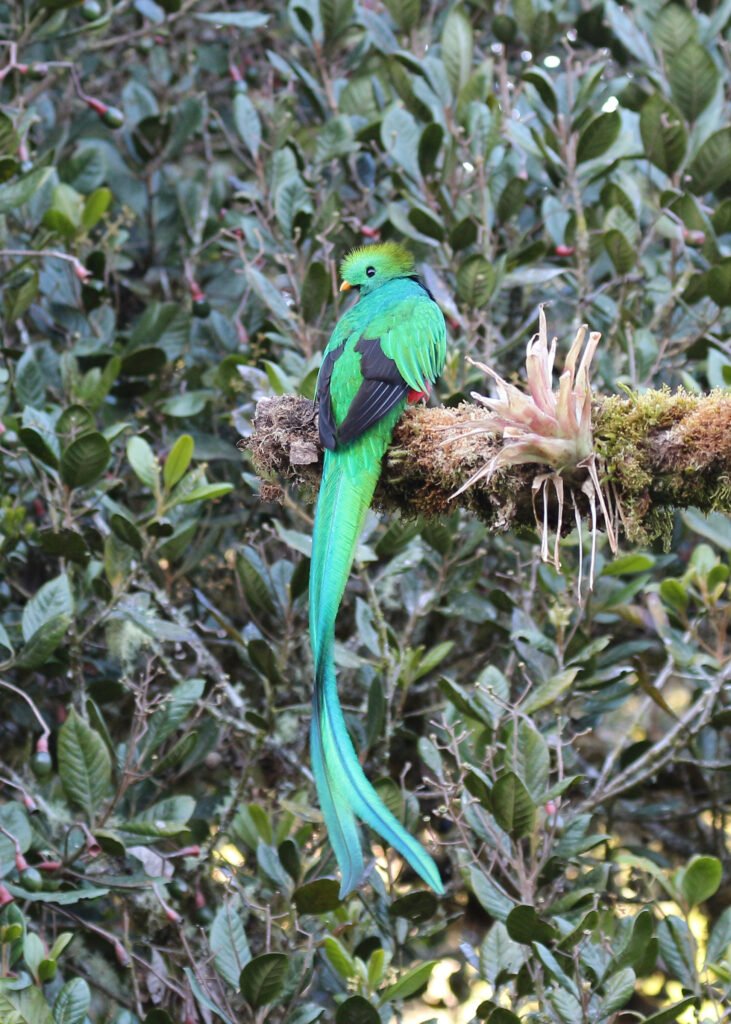
Featured photo: Resplendent quetzal in Los Quetzales National Park by Bernard Gagnon, CC0 1.0. Resized; thumbnails may be cropped.
A photograph can express Costa Rica’s natural identity without depicting a species found only within its borders. Country endemics, species shared with neighboring regions and widespread animals in characteristic habitat all tell meaningful stories. Understanding the difference makes your travel planning and captions more accurate.
What endemic actually means
A species endemic to Costa Rica occurs naturally only in Costa Rica. A regional endemic has a range confined to a broader area that can cross national borders. “Common in Costa Rica,” “iconic” and “endemic” are therefore different descriptions. Rarity and endemism also describe different things: a geographically restricted species is not automatically easy or difficult to photograph.
According to Avibase’s Costa Rica checklist, maintained by Birds Canada, the Mangrove Hummingbird is endemic to Costa Rica. Its habitat associations make it a specialist planning subject, rather than a bird to expect in any garden. Verify current names, range information and local conditions before organizing a trip around it.
Shared highland identity crosses a border
The mountains of Costa Rica and western Panama support birds with restricted regional ranges. Those shared distributions reflect ecological geography rather than the national boundary. According to Jankowski and colleagues’ 2009 study in the Journal of Animal Ecology, the Tilarán highlands support birds with ranges restricted to the highlands of Costa Rica and Panama. Describe these accurately as regional birds instead of labeling them Costa Rica-only endemics.
Begin practical location research with San Gerardo de Dota and Monteverde. Their species possibilities and access conditions are not identical. Altitude, forest type and local distribution should guide the choice.
Iconic subjects need honest labels
The Resplendent Quetzal is an important photographic interest in Costa Rica, but its natural distribution extends beyond the country. A compelling quetzal image does not need an inaccurate claim of national endemism. The branch, forest atmosphere and observational context can connect the picture to the place where you made it.
Use the quetzal photography guide to plan that subject on its own terms. For any target animal, ask about habitat, likely viewing distance, season and the time you can responsibly spend observing.
Plan for habitat before planning a close-up
Choose locations that protect and support the species, then confirm permitted access. A restricted range does not justify stepping off trails, approaching a nest or revealing a sensitive precise location. A distant environmental frame may be the appropriate photograph when a closer approach would disturb the subject.
Include plants, landscape structure and surrounding life in the story. The habitat photography guide helps you build that context. This approach can also keep a trip rewarding if a rare target does not appear.
The eBird taxonomy documentation explains that its reporting system includes multiple taxonomic categories, including identifications broader than a species. Before turning a record into a caption or species total, check the identification category and the current taxonomic treatment.
Write captions that contribute to understanding
Record the date, general place, identification confidence and circumstances of the image. Check species names against a current resource before publishing. If you used a managed photography setup or photographed a captive animal, state that context where relevant. Avoid presenting a national checklist as proof that you personally encountered every listed species.
The objective is a respectful, accurate photographic story about place. Endemism can enrich it, but it should not become a reason to disregard welfare or turn the trip into a test of collecting rare subjects.
Frequently asked questions
Is a species shared with Panama endemic to Costa Rica?
No. It may be endemic to a region spanning the two countries, but that is different from being restricted to Costa Rica.
Is the Resplendent Quetzal a Costa Rica-only species?
No. Its natural range extends beyond Costa Rica. It can still be a meaningful subject for a Costa Rican highland story.
Does endemic mean endangered?
No. Endemism describes geographic range; conservation status describes extinction risk using separate criteria.
Should I share a precise location for a sensitive species?
Avoid revealing locations that could increase disturbance. Consult local conservation guidance and use a general location when appropriate.
Compose a trip around your photographs
Tell Physis your travel dates, photographic interests, preferred pace and comfort needs. Those details help shape the stays, transport and time in the field around the images you want to explore. Explore the Costa Rica nature photography guide and compare hotels and lodges for photographers, then compose your private Costa Rica photography itinerary.
Reference for the natural history or planning context: Avibase Costa Rica checklist and endemic status. Conditions and access should be checked for your actual travel dates.
Regional context: research on habitat specialization and montane bird diversity in Costa Rica.