
Hummingbirds in Costa Rica: Portraits and Motion
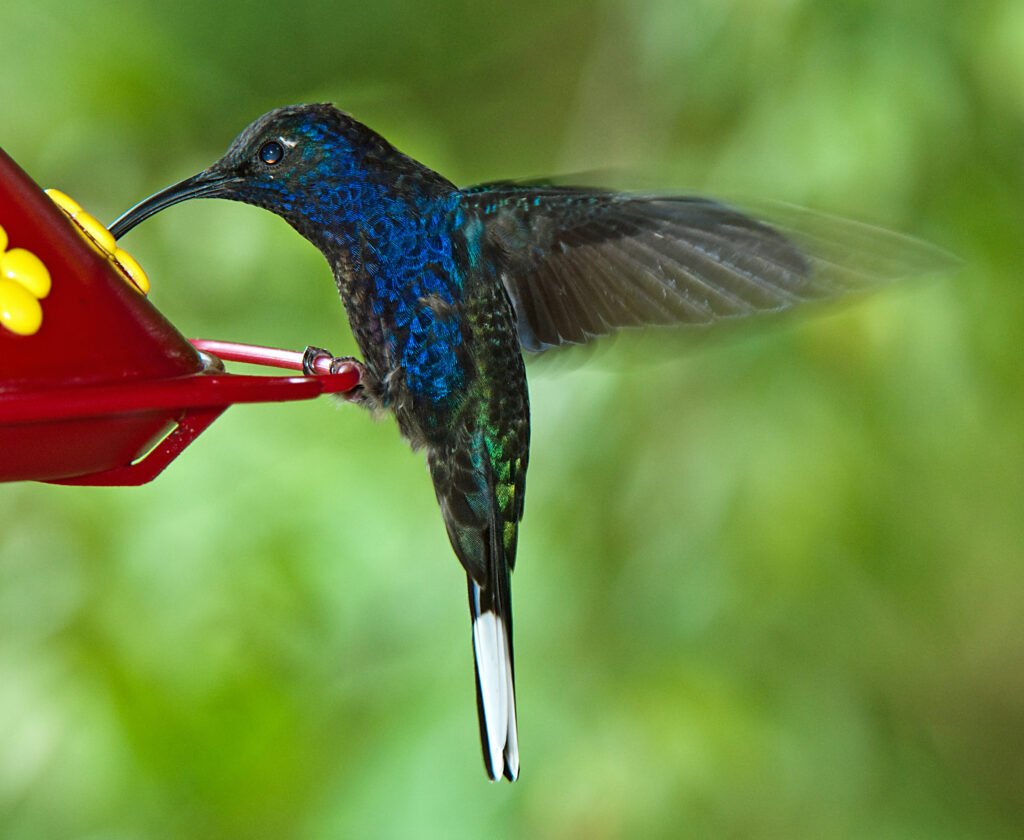
Hummingbirds can make a Costa Rica photography trip feel both intimate and energetic. A resting bird invites attention to color, posture and background; a flying bird asks you to anticipate movement. Exploring both approaches gives a session more variety than pursuing only a perfectly frozen wing.
Cornell Lab of Ornithology: The Cornell Lab’s photography guidance places observation alongside composition and camera skills.
Make time for the quieter image
Watch the surroundings as well as the most obvious point of activity. A resting hummingbird can offer a calmer composition and a chance to notice how the plumage changes with the angle of light. A little space around the bird may show the highland garden or forest setting. Keep your movements restrained and allow a subject to remain undisturbed rather than approaching repeatedly for a larger image.
Decide what motion should look like
Wings do not have to look identical in every photograph. A sharper body with visible wing movement can suggest hovering; a very short exposure can reveal a different instant. Light, equipment and the bird’s movement determine what is practical. Do not copy a shutter speed as a universal answer. Review the eye, body and wing rendering separately and make one purposeful adjustment at a time.
Use the surrounding habitat as a second subject
The Dota highlands and Turrialba offer contrasting regions to investigate for hummingbird opportunities. Confirm each location’s actual services and any feeder or photography setup. Between bird appearances, look for flowers, leaves and the changing light that explain the setting. If a session uses maintained feeders, describe that honestly in your captions. Natural-light observation is a useful starting point; specialized lighting should follow site rules and wildlife considerations.
Recommendations for your visit
- Plan a portrait and a movement image rather than only a species list.
- Check backgrounds before the bird enters the scene.
- Ask how any feeding station is maintained and how photographers share space.
Connect the subject with your route
Compare San Gerardo de Dota, Turrialba. Check current access, services and conditions directly before finalizing plans.
Continue with Hummingbird field guide, Quetzal photography.
Questions photographers ask
Is hovering the only worthwhile photograph?
No. Perched portraits and habitat views can be just as expressive.
Can a beginner enjoy this subject?
Yes. Begin with observation and resting birds, then explore movement as opportunities arise.
Do I have to use flash?
No. Natural light offers many possibilities. Any added lighting needs an appropriate, permitted approach.
What can accompany a hummingbird session?
Flowers, forest details and broader highland scenes can provide a complementary photographic story.
Illustrative photo: Violet sabrewing hummingbird in Costa Rica by Kathy & sam, CC BY 2.0. Resized; thumbnails may be cropped. This image and its resized/cropped versions remain available under that license. It illustrates the setting or subject; it is not presented as an example of every technique discussed.