
Forest-Edge Bird Photography in Costa Rica
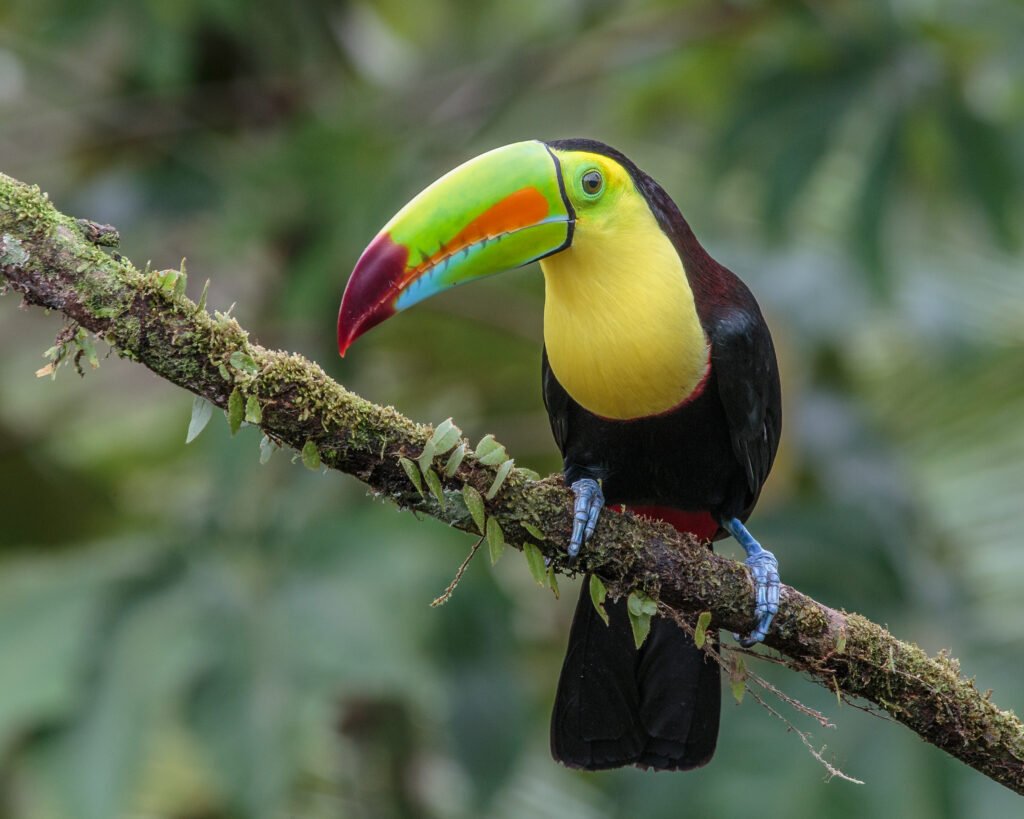
Forest-edge bird photography in Costa Rica rewards looking beyond the bird itself. The meeting point between trees, gardens and open space can offer changing backgrounds, accessible viewpoints and glimpses of feeding or movement. For photographers, it is a place to practice portraits and habitat images during the same session.
Cornell Lab of Ornithology: The Cornell Lab’s photography guidance places observation alongside composition and camera skills.
Read the scene before raising the camera
Look at where the light falls, which branches are clear and where your position leaves birds room to move. A clean background is useful, but an image with leaves, fruit or neighboring trees can explain more about the encounter. Stay on permitted paths and use the view that already exists. Removing vegetation or encouraging a bird onto a different perch changes the scene you came to observe.
Make a small set of different photographs
When a bird remains visible, consider a portrait, a looser environmental frame and an image of an observed action. A feeding moment or a turn toward the light may carry more meaning than another identical close-up. Leave space in the direction the bird faces. If branches interrupt the view, a small permitted change in your own position may help; repeated advances toward the animal are a poor substitute for patience.
Choose bases that allow repeat observation
Sarapiquí, Boca Tapada and the Arenal area are useful regions to investigate for forest settings and nearby lodging. Verify each property’s actual habitat and photography arrangements rather than assuming every garden offers the same access. Several sessions at one base help you learn its changing light. A quiet session can still produce landscape details or plant studies, so the day need not depend on one bird appearing.
Recommendations for your visit
- Ask whether sessions concern natural forest edges or maintained feeding stations.
- Carry enough focal-length flexibility for both portrait and habitat views.
- Review the background and the bird’s behavior before moving closer.
Connect the subject with your route
Compare Sarapiquí, Boca Tapada. Check current access, services and conditions directly before finalizing plans.
Continue with Bird photography beyond the checklist, Ethical wildlife photography.
Questions photographers ask
Are forest edges easier than forest interiors?
They can offer different light and viewpoints, but visibility and bird activity vary. Treat them as a complementary setting.
Should I always blur the background?
No. A recognizable habitat can strengthen the image when it supports the bird rather than competing with it.
Is a feeder essential?
No. Natural habitat observation offers its own opportunities; ask providers to explain any managed setup transparently.
What else can I photograph there?
Plant details, insects, patterns of light and wider habitat scenes can complement a bird-focused visit.
Illustrative photo: Keel-billed toucan in Costa Rica by Andy Morffew, CC BY 2.0. Resized; thumbnails may be cropped. This image and its resized/cropped versions remain available under that license. It illustrates the setting or subject; it is not presented as an example of every technique discussed.