
Hummingbird Photography in Costa Rica: A Practical Field Guide
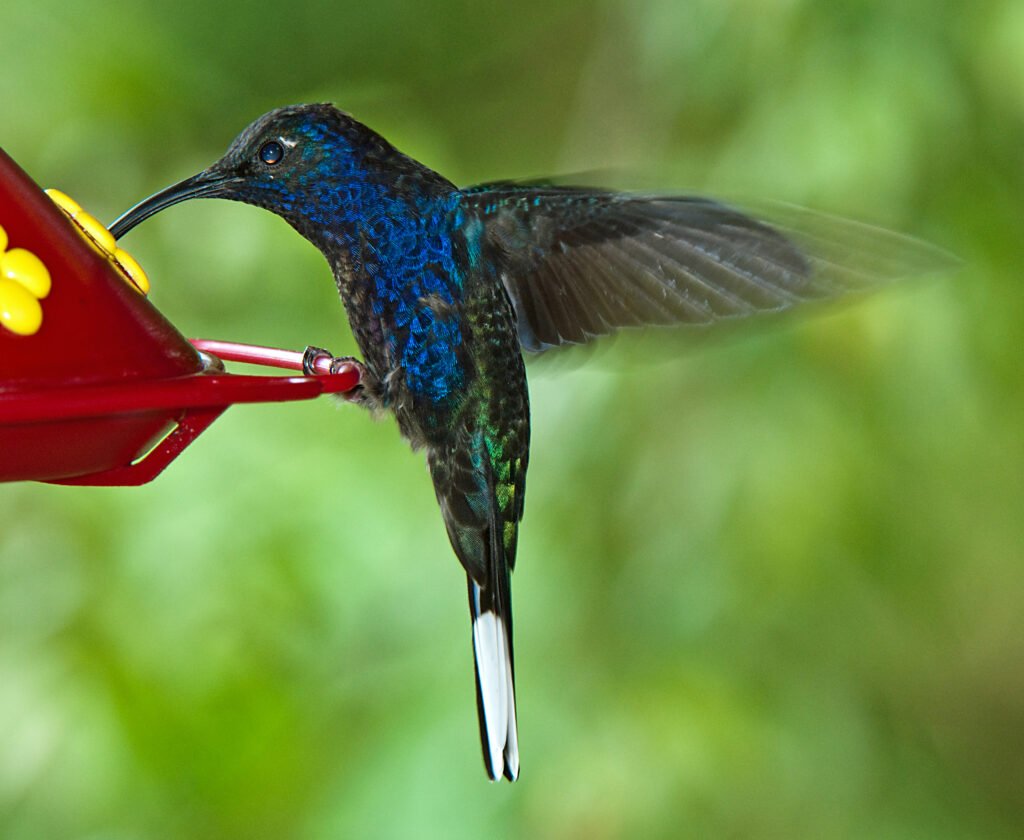
Featured photo: Violet sabrewing hummingbird in Costa Rica by Kathy & sam, CC BY 2.0. Resized; thumbnails may be cropped.
Hummingbird photography in Costa Rica rewards observation before speed. A bird resting on a branch, visiting a flower or hovering in changing light calls for a different approach. Decide which image you want to make, then choose a location and a working method that give the bird space.
Choose the setting before the equipment
Gardens, forest edges and dedicated photography experiences can offer different backgrounds and working distances. In the Dota highlands, research Batsú Gardens and Feathers Garden. Ask about current arrangements, group size and whether the session uses feeders or natural flowers. Confirm the service directly; a listing does not establish availability.
Look beyond the number of birds. A quiet place with room to wait and an uncluttered background may suit your photography better than a busy viewing area. For a wider route, read our bird photography destination guide.
Begin with a perched portrait
A resting bird gives you time to check focus and exposure. Observe from a comfortable distance and let the bird choose its perch. Position yourself within the permitted viewing area so that branches do not cross the head. Leave room in the direction the bird faces.
Pay attention to the background before taking a burst. A small adjustment to your own position can simplify the image, but do not move vegetation or approach a perch to force a closer view.
Adapt settings to movement
Use a faster shutter speed for a moving subject than for a still bird. Choose an aperture that provides enough depth of field for your intended view and raise ISO when needed. There is no universal setting: light, distance, focal length and the amount of wing blur you want all matter.
For flight, continuous autofocus and a short burst can help. Start with a focus area you can keep on the subject, then review whether the eye is sharp. A high frame rate cannot compensate for focus landing on a flower behind the bird.
Watch the angle of light
The appearance of hummingbird plumage can change with viewing angle and illumination. Make a few frames, inspect the result and remain patient. Bright flowers and reflective feathers can lose detail, so check highlights rather than relying only on the overall brightness of the screen.
Soft light can simplify exposure, while backlight may suggest a silhouette or a more atmospheric frame. Work with the conditions instead of asking someone to reposition a bird.
Use feeders thoughtfully
If an operator uses feeders, ask who maintains them and how the birds’ welfare is protected. Follow the site’s rules and avoid adding food or changing the setup yourself. Do not remove a feeder to force visits to your chosen flower. Keep a clear path for birds to arrive and leave.
For a natural history caption, describe the setting accurately. A photograph made beside a maintained feeder should not be presented as an entirely unassisted encounter deep in the forest.
Prepare for the session
- Carry rain protection and keep spare batteries dry.
- Bring a lens you can hold comfortably while following movement.
- Use support where it helps with waiting and does not obstruct others.
- Allow time for observation before choosing a frame.
- Stop or move back if your presence changes the bird’s behavior.
Read Audubon’s bird photography ethics resources before your trip. To coordinate a route around your preferred subjects and pace, explore Physis Photo Tours. Sightings and photographic results depend on conditions.