
Coastal Long Exposures: Costa Rica’s Moving Shorelines
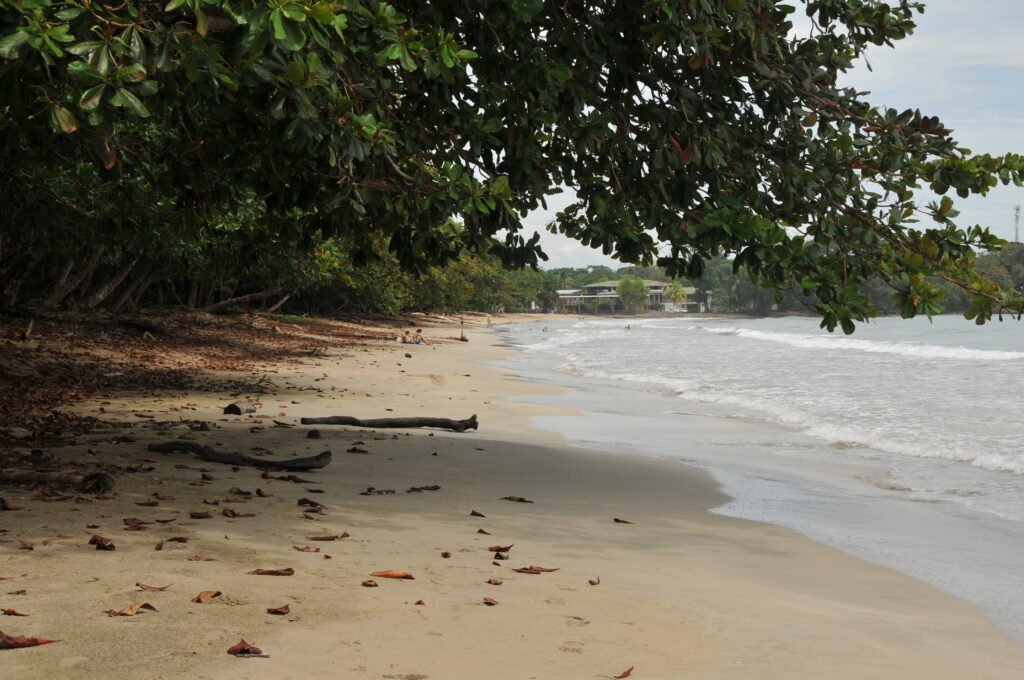
Coastal long exposures can add atmosphere and rhythm to a Costa Rica photography trip. Waves, reflected light and clouds offer a changing scene, while a stationary element gives the image structure. Pacific and Caribbean settings invite different compositions; the worthwhile picture is the one you can make from an appropriate, safe viewpoint.
Nikon’s waterfall photography guide: Nikon’s waterfall guidance illustrates how shutter speed changes the appearance of moving water.
Watch the shoreline before setting up
Spend time observing where water reaches and whether the surface and access are suitable for your equipment. Follow local instructions and keep a generous distance from moving water. Never treat a tripod as a reason to remain in a place that conditions have made unsuitable. A higher or more distant viewpoint can still produce a compelling coastal image, especially when you use foreground shapes and layers deliberately.
Choose how much movement to show
A modestly slower exposure can preserve the direction of water, while a much longer exposure can simplify it into softer forms. Compare the results rather than using the same approach for every wave. Keep the horizon and stationary elements intentional. Filters and tripods may support the picture, but wind, spray and local rules affect what is practical. Protect your equipment and review the lens surface between attempts.
Give the coast a role beyond the final stop
A coast can support birds, habitat views and landscape sessions, so it need not be only a resting place after the forest. Investigate Jacó–Herradura and Caribbean locations through the guides, then confirm actual access and conditions. Reserve time for more than one light situation if landscapes matter to you. An attractive shoreline photograph is not proof that swimming or close access to rocks is appropriate.
Recommendations for your visit
- Choose a permitted position well away from changing water.
- Experiment with movement while retaining a clear visual anchor.
- Confirm local access instead of assuming every beach is available at all hours.
Connect the subject with your route
Compare Jacó and Herradura, Caribbean coast guide. Check current access, services and conditions directly before finalizing plans.
Continue with Two coasts, different stories, Microclimates and light.
Questions photographers ask
Is the Pacific always better than the Caribbean?
No. Choose the setting for your route, light and intended picture rather than a blanket ranking.
Do I need to stand in the water?
No. Compose from an appropriate land-based viewpoint and follow local instructions.
Will a longer exposure always look better?
No. Water speed, light and the visual story determine the useful exposure.
Can coastal photography complement birds?
Yes. Coastal habitats can offer different subjects, but wildlife opportunities and access need separate checking.
Illustrative photo: Cahuita National Park Caribbean coast by Manuel Velazquez, CC BY 3.0. Resized; thumbnails may be cropped. This image and its resized/cropped versions remain available under that license. It illustrates the setting or subject; it is not presented as an example of every technique discussed.