
Bird Photography in Costa Rica: Beyond the Species Checklist
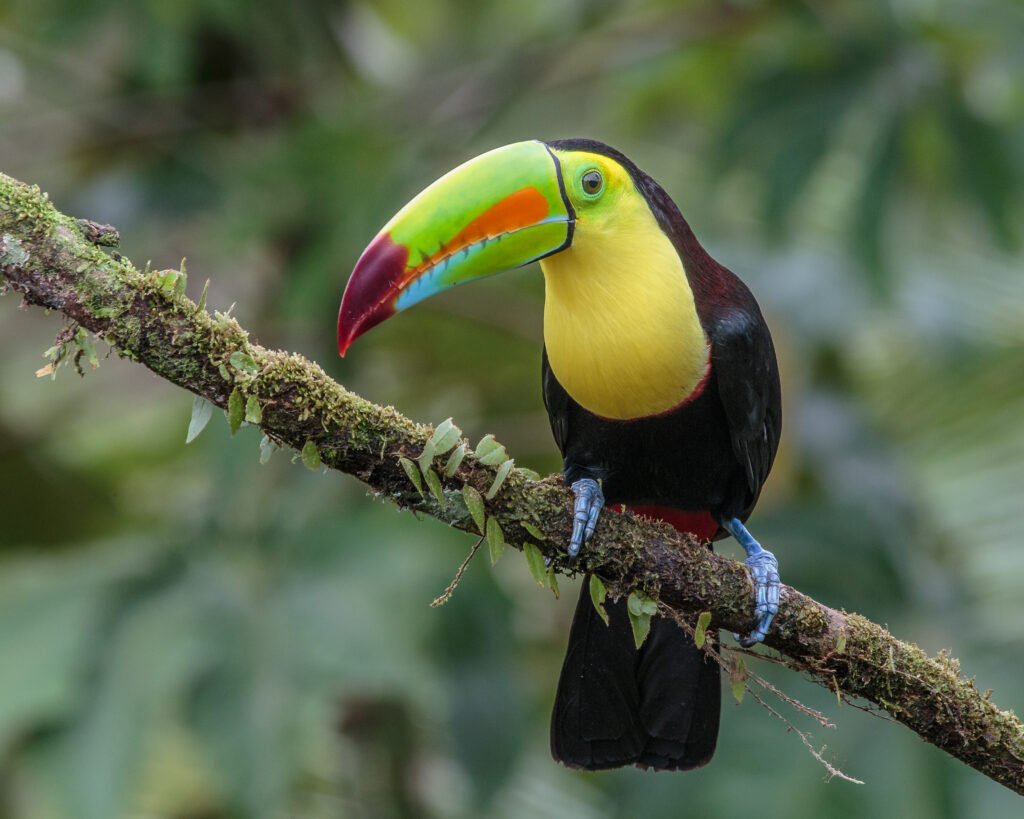
Featured photo: Keel-billed toucan in Costa Rica by Andy Morffew, CC BY 2.0. Resized; thumbnails may be cropped.
A bird checklist tells you what has been recorded; it does not tell you what your photographs will communicate. Costa Rica bird photography becomes more rewarding when you choose a visual goal alongside your target species. A portrait, a feeding sequence and a small bird within its forest can tell three different stories about the same encounter.
The Cornell Lab of Ornithology’s Clements Checklist methods page identifies eBird as a resource for observation-based range maps and regional species lists. Use those tools to inform where you look; they describe bird records, while a photographic plan must also consider light, distance and background.
Decide what kind of image you want
Start with a short set of priorities. If your goal is a clean portrait, viewing angle and background may matter more than the total number of species at a site. If you want behavior, repeated time near a naturally used feeding area can be more useful than moving quickly between stops. If flight is central, you need space to track a bird and light that supports an appropriate shutter speed.
The guide to bird photography locations helps you compare bases. Before committing, ask a host or guide about photographic conditions, access and walking demands. A promising birding destination may still involve obstructed views or a challenging canopy.
Leave room for habitat
Look for opportunities to include the setting: a mossy branch in mountain forest, a bird reflected in water or a silhouette against leaves. A smaller subject can work when the surrounding shapes have a clear relationship. Avoid including extra foliage simply because a wider frame seems more natural; organize the picture around the bird and its environment.
San Gerardo de Dota and Caño Negro offer contrasting settings to research. The first is a highland base; the second is a wetland destination. They make different demands on light, movement and logistics, and neither guarantees a particular composition.
Behavior rewards observation before shooting
Watch how a bird uses its space before making a long burst. Which direction does it face? Does it return to one natural perch? What changes when another bird arrives? These observations help you anticipate without forcing the animal to repeat an action. Keep your distance from nests and avoid blocking feeding or escape routes.
When activity begins, photograph a sequence with a clear purpose. Include the action and enough surrounding space for the movement to read. A sharp frame without meaningful posture may communicate less than a slightly wider image that explains the interaction.
Make portraits deliberate
Check the background, eye position and crop edges before tightening the composition. Branches through the head and bright patches behind the bird can be hard to repair later. A small change of position may help, but remain on permitted paths and do not approach merely to remove a distraction. Accept the angle that the encounter responsibly allows.
According to eBird’s rules and best practices, a checklist is tied to a date, location and observation protocol, and can include confidently identified birds heard as well as seen. An eBird record therefore does not necessarily mean a bird was visible, approachable or photographed.
Use a checklist as a research tool
Consult a current national checklist for names and occurrence, then verify local habitat and season with more specific information. A country-level record does not establish abundance at your lodge. For a specialist goal, use the quetzal photography guide rather than assuming every cloud forest offers the same chances.
Carry an ethical approach into every session. The wildlife photography ethics guide provides a practical baseline. The portfolio should reflect observation and patience, with no sighting or image outcome treated as owed.
Frequently asked questions
Should I bring a long target-species list?
Use it to communicate interests, then identify a few priorities. A long list can conflict with the time needed for photographs.
Are feeder photographs the same as forest encounters?
They document different circumstances. Describe the context honestly and choose locations that fit the story you want to tell.
Do I need a professional telephoto lens?
A suitable lens helps, but working distance, support, light and technique matter. Match the equipment to your goals and carrying comfort.
Can I photograph birds well from a general birding walk?
Sometimes, but the pace and stops may serve observation rather than photography. Discuss the session’s purpose beforehand.
Compose a trip around your photographs
Tell Physis your travel dates, photographic interests, preferred pace and comfort needs. Those details help shape the stays, transport and time in the field around the images you want to explore. Explore the Costa Rica nature photography guide and compare hotels and lodges for photographers, then compose your private Costa Rica photography itinerary.
Reference for the natural history or planning context: Avibase Costa Rica bird checklist. Conditions and access should be checked for your actual travel dates.