
Beyond Birds: Costa Rica’s Photography Possibilities
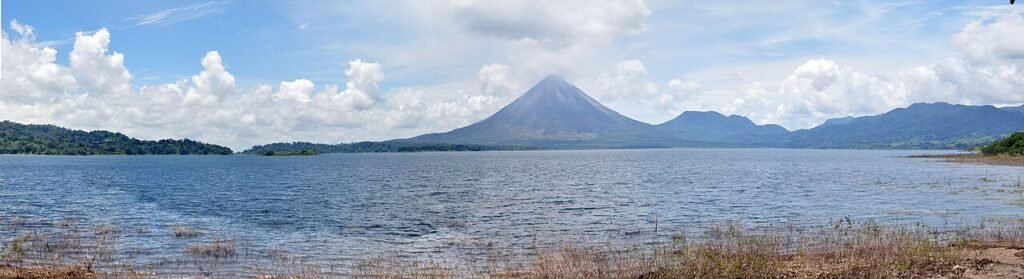
Illustrative photo: Arenal Volcano and Lake Arenal panorama by Kamran Saraf, CC BY 3.0. Resized; thumbnails may be cropped. This image and its resized/cropped versions remain available under that license. It illustrates the setting or subject; it is not presented as an example of every technique discussed.
Bird photography is a must for a Costa Rica nature trip, but it can be the beginning of a much wider photographic journey. Forests, mountains, wetlands and coastlines invite you to move between subjects, scales and ways of seeing. You can arrive with birds at the top of your list and leave with an interest in macro, wildlife stories, flowing water or the night sky.
SINAC: SINAC’s park information documents contrasting protected habitats across Costa Rica. The following ideas apply that context to trip planning and creative choices; they are not promises of encounters or results.
Think in habitats, not only species
A cloud-forest visit might bring opportunities to photograph a bird on a branch, mist among trees and the patterns of a wet leaf. A lowland forest can invite patient wildlife observation and a slower search for small subjects. Wetlands add reflections and movement; coastal settings add horizons and changing water. These are creative possibilities, not a promised sequence of encounters. Let the conditions on the day determine what deserves your attention.
Let one technique lead to another
A telephoto lens helps isolate a bird, but the same lens can select layers of distant forest. A macro lens reveals tiny details; a wider view explains the habitat around them. A tripod can support a quiet plant study or a long exposure of flowing water. You do not need to master every technique before visiting. Choose one familiar approach and one new idea to explore with enough time to experiment.
Make room for different kinds of sessions
Protect your bird mornings, then allow some unhurried time for other subjects when access and conditions suit them. A night walk and an astrophotography outing have different requirements: one concerns wildlife and guided access, the other clear sky and an appropriate location. Neither should be inserted automatically after an exhausting day. A richer trip is often a better-paced trip, rather than a longer list of activities.
Recommendations for your visit
- Choose two or three photographic interests before selecting your route.
- Ask how each base supports those interests, including access and time in the field.
- Leave repeat sessions for birds and a flexible session for another technique.
Connect the subject with your route
Compare Costa Rica’s habitats, Monteverde, Caño Negro. Check current access, services and conditions directly before finalizing plans.
Continue with Bird photography destinations, Year-round photography, Trip planning.
Questions photographers ask
Should birds remain the priority?
Yes, if they are your main interest. Add other subjects around your strongest bird opportunities, without rushing those sessions.
Do I need equipment for every technique?
No. Start with equipment you already know and select a small number of complementary interests.
Can all these subjects fit in one destination?
Some settings offer several possibilities, but each has different access, light and wildlife. Compare habitats rather than expecting one base to provide everything.
Is a return trip worthwhile?
A second journey can focus on a different habitat or photographic approach instead of repeating a hurried national circuit.