
Insects, Flowers and Textures: Small Stories in Costa Rica
Insects, flowers and textures offer Costa Rica photographers a way to build small visual stories between larger wildlife encounters. A damaged leaf, a tiny visitor on a blossom or a pattern of moisture can be worth a deliberate photograph. Looking at these details helps explain the habitat that also supports your bird and wildlife images.
Organization for Tropical Studies: The Organization for Tropical Studies documents plant and animal diversity at its Costa Rican research stations.
Look for relationships rather than isolated objects
A flower with a visiting insect can show scale and an observed interaction. A leaf with an interesting surface can become an abstract composition. Notice how shapes repeat and where your eye lands first. When a subject moves, avoid forcing it to remain for the photograph. A simple picture of the plant in its natural setting may be a better choice than an incomplete close-up.
Use light to reveal texture
Side light can emphasize surfaces, while soft overcast light can make colors easier to compare. Wet leaves can reflect bright patches that compete with the subject, so inspect the frame and change your own permitted position if needed. Choose an angle that communicates your idea. Photographing a naturally still detail may also be a good opportunity to explore manual focus or a carefully planned focus stack.
Allow botanical time in the itinerary
Gardens and permitted forest paths can complement a bird-focused route, but ask about opening hours and whether photography equipment is welcome. The highlands and lowlands need not offer the same subjects. Give each area room to reveal its own details instead of expecting a particular flower or insect. Keep a record of confirmed names and leave uncertain identifications broad in your captions.
Recommendations for your visit
- Try a detail, a relationship and a wider plant view during one session.
- Use changing weather as a reason to look differently, rather than abandoning all photography.
- Keep flowers and insects in their natural position.
Connect the subject with your route
Compare Turrialba, Monteverde. Check current access, services and conditions directly before finalizing plans.
Continue with Plants and insects, Macro field techniques.
Questions photographers ask
Is this only for specialists?
No. Looking for patterns and relationships is accessible with familiar close-focusing equipment.
Should every part of a flower be sharp?
Not necessarily. Selective focus can support the picture you want to make.
Can I move a flower into better light?
Photograph plants where they grow and do not alter protected or living subjects for the camera.
What if I cannot identify an insect?
Use a broad, accurate description and seek a reliable identification before assigning a species name.
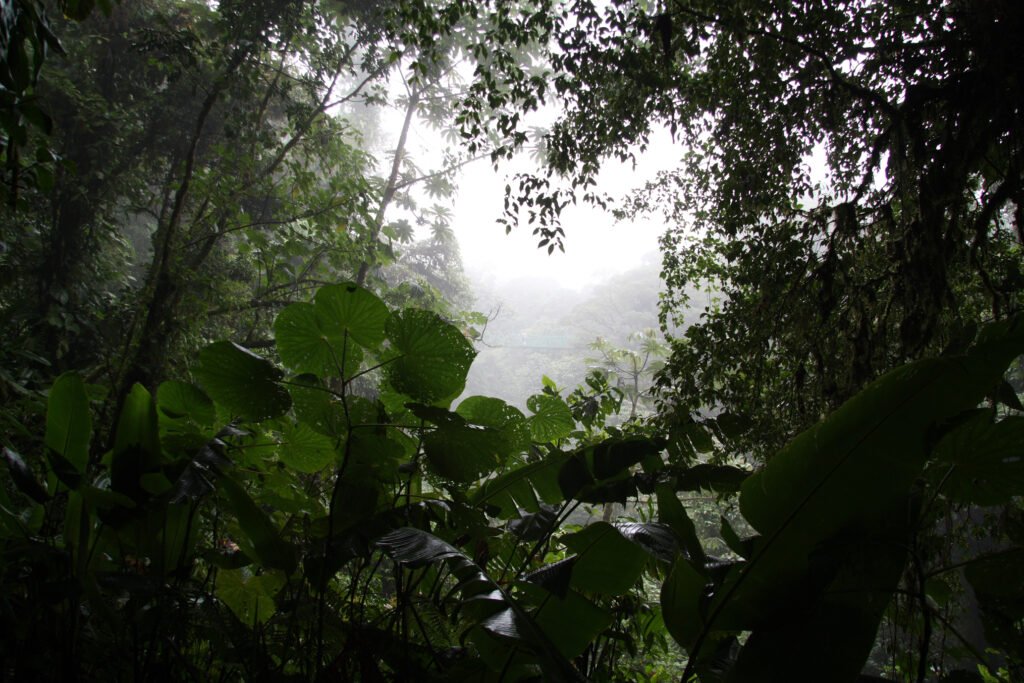
Illustrative photo: Mist in Monteverde cloud forest by (WT-shared) Velorian, CC BY-SA 1.0. Resized; thumbnails may be cropped. This image and its resized/cropped versions remain available under that license. It illustrates the setting or subject; it is not presented as an example of every technique discussed.