
Frogs and Reptiles: Natural Encounters in Costa Rica
Frog and reptile photography can add an entirely different visual language to a Costa Rica nature journey. A small animal beside a leaf or within the forest floor invites attention to texture, color and habitat. Some encounters suit close-up photography; others are better observed from farther away. The aim is to document a natural scene, not arrange one.
Organization for Tropical Studies: The Organization for Tropical Studies documents plant and animal diversity at its Costa Rican research stations.
Ask how the encounter is organized
Before booking, clarify whether an activity observes free-living animals or uses captive subjects and staged settings. An attractive photograph should not depend on moving a wild frog onto a preferred leaf. Ask the provider about access, lighting and the pace of the session. Follow the guide’s directions and do not touch animals, disturb shelter or change their surroundings.
Balance the animal and its setting
A close portrait can show detail, while a slightly wider view explains the perch, foliage or surrounding habitat. Work from a stable position and keep your camera ready without crowding the animal. Where the view is difficult, accept a partial encounter instead of forcing access. Snakes and unfamiliar animals should be observed from a distance set by the qualified guide, never approached for a macro-style picture.
Plan night and daytime interests separately
A night walk is not simply a daytime visit extended beyond closing time. Confirm that the activity is permitted, guided where required and appropriate for photography. Use lighting only as the guide and location allow, keep sessions brief and let an animal remain undisturbed. Arenal, Sarapiquí and Osa provide regions to investigate; the actual species and conditions on a visit remain uncertain.
Recommendations for your visit
- Choose providers who explain whether subjects are wild, captive or staged.
- Include habitat when it helps viewers understand the real encounter.
- Make observation and restraint part of the photographic experience.
Connect the subject with your route
Compare Arenal and La Fortuna, Sarapiquí. Check current access, services and conditions directly before finalizing plans.
Continue with Ethical wildlife photography, Macro field techniques.
Questions photographers ask
Are frogs only a nighttime subject?
No. Opportunities depend on species, location and conditions; verify the type of activity with the provider.
Should I expect a red-eyed tree frog?
No species encounter is guaranteed. Avoid choosing a trip around a promised photograph.
Can I use a macro lens for every reptile?
No. Subject welfare and safe distance take priority, especially with snakes.
How do I caption a captive subject?
State that it was captive and describe the setting transparently rather than presenting it as a wild encounter.
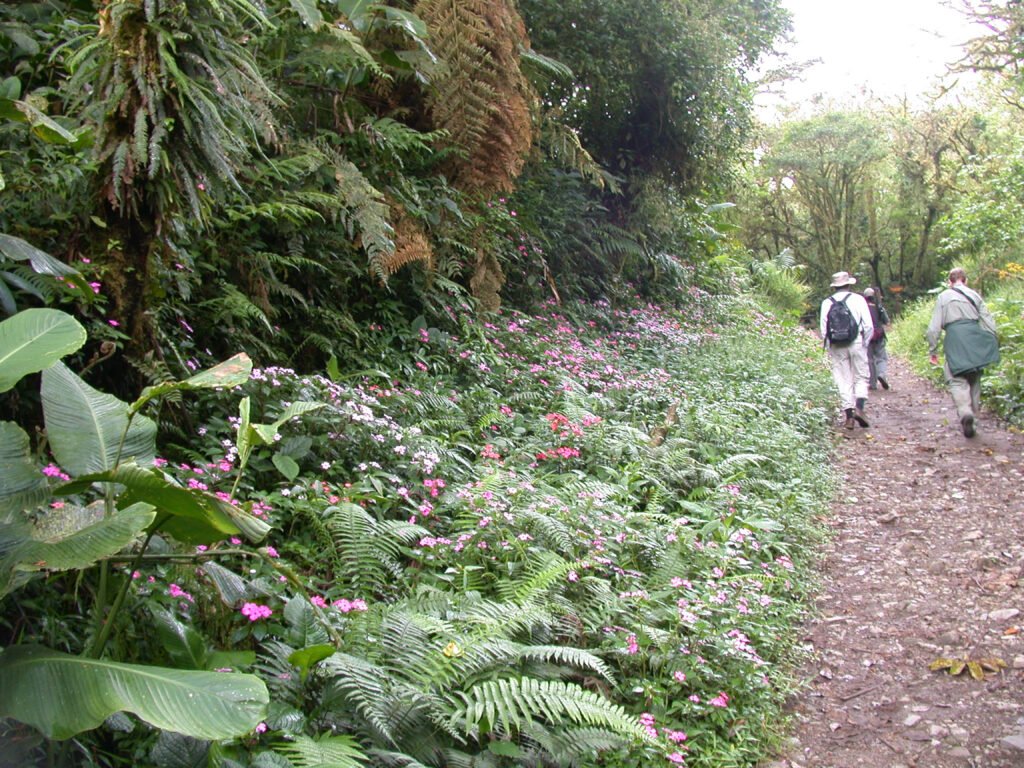
Illustrative photo: Monteverde cloud forest habitat by Ron Knight (sussexbirder), CC BY 2.0. Resized; thumbnails may be cropped. This image and its resized/cropped versions remain available under that license. It illustrates the setting or subject; it is not presented as an example of every technique discussed.