
Costa Rica’s Habitats: A Photographer’s Guide
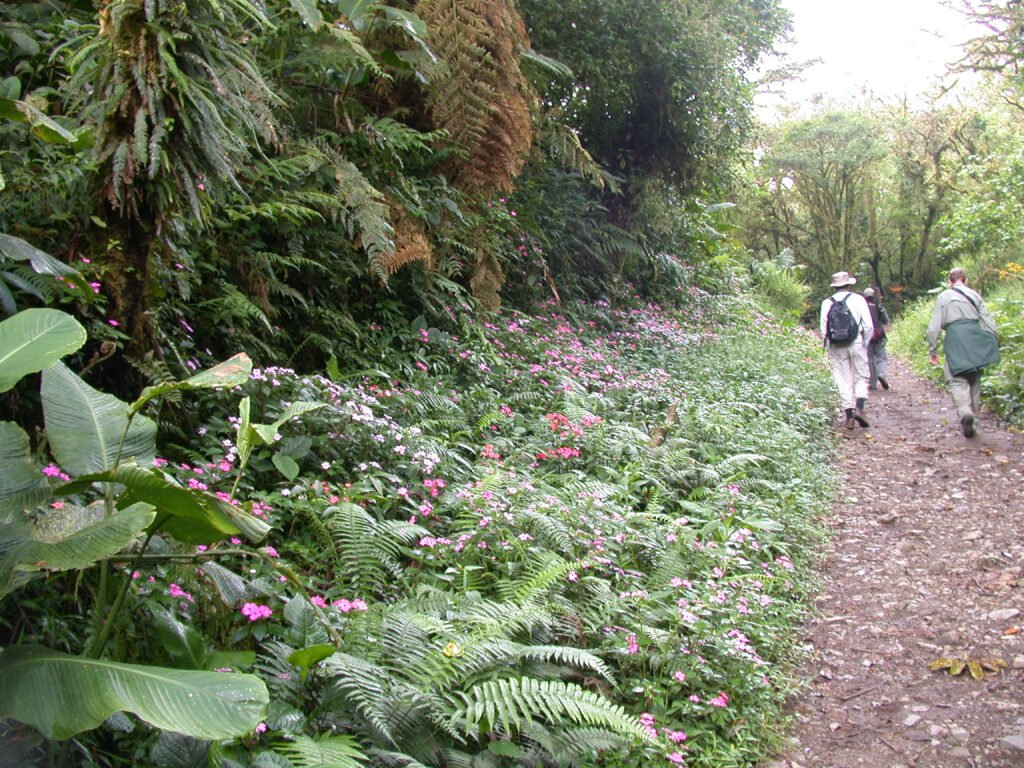
Featured photo: Monteverde cloud forest habitat by Ron Knight (sussexbirder), CC BY 2.0. Resized; thumbnails may be cropped.
Choosing a habitat is one of the most useful decisions you can make before a Costa Rica photography trip. A misty mountain forest asks you to work differently from a sunlit wetland or a seasonally dry woodland. The variety gives you room to build a portfolio with different light, subjects and visual moods, rather than a succession of similar close-ups.
According to SINAC’s official map library, Costa Rica’s landscapes include mapped forest cover, mangrove ecosystems and wetlands. For photographers, these are distinct environments to compare when deciding what visual variety a route should offer.
Rainforest: work with layers and small windows of light
In humid lowland forest, the canopy can leave the understory surprisingly dark. Leaves, vines and trunks create overlapping planes, and an animal may be visible through only a narrow opening. Look for a clear background before seeking a tighter frame. A small subject surrounded by forest can explain the place more effectively than a portrait that removes every trace of habitat.
Sarapiquí and the Osa Peninsula are useful starting points for researching humid forest experiences. They are separate destinations with different access and travel requirements. Give each chosen base time for repeat walks, changing light and an occasional unplanned encounter.
Cloud forest: let atmosphere become part of the image
Mountain forest can offer mist, moss-covered branches and a quieter palette. Cloud cover changes contrast and visibility; it does not guarantee an atmospheric scene on demand. Simplify the composition when the forest looks tangled. A nearby fern, a branch disappearing into fog or a bird within a small gap can provide structure without needing a broad view.
Compare Monteverde’s photographic possibilities with the highland setting around San Gerardo de Dota. Elevation, slope and the particular trail matter as much as the destination name. Ask about gradients, footing and the distance you will carry equipment.
Dry forest: photograph seasonal change
Seasonally dry forest in northwestern Costa Rica can look very different as foliage and rainfall change. Open branches, leaf litter and strong side light create different opportunities from the deep greens of a wet forest. A dry-looking landscape is still a living ecosystem. Include bark, seed pods, insects and wider scenes instead of measuring the session only by large animal sightings.
Wetlands and mangroves: watch water and edges
Wetlands invite reflections, silhouettes, feeding behavior and birds in flight. Water level, vegetation and the route determine how close you can responsibly observe. Mangroves introduce another environment: tidal water, exposed roots and a dense border between land and sea. These are not interchangeable settings, and a wetland boat outing does not necessarily include mangrove habitat.
The Costa Rica Tourism Board (ICT) highlights tropical rainforests, dry forests, volcanic mountain ranges and Pacific and Caribbean beaches among the country’s natural environments. The photographic choice is which contrasts you want time to explore, rather than how many labels you can fit into an itinerary.
Build variety without spending the trip in transit
Choose two or three contrasting environments around a clear photographic goal. Keep travel days realistic, and use the regional destination guide to connect habitat choices with actual bases. One extra morning in a well-chosen place can be more valuable than another distant stop.
Frequently asked questions
Do I need to visit every habitat?
No. A smaller selection allows repeat sessions and a more coherent story. Choose contrasts that suit your interests.
Is a cloud forest always cloudy?
No. Cloud immersion and visibility vary with weather, elevation and location. Treat mist as an opportunity rather than a promise.
Does dry forest have fewer photographic subjects?
Its subjects and visual conditions differ. Seasonal foliage, insects, birds and woodland structure can all contribute to a varied portfolio.
Can one lens cover all these environments?
A versatile zoom helps, but close detail, distant wildlife and broad landscapes make different demands. Select equipment for your priorities and carrying comfort.
Reference for the natural history or planning context: SINAC ecosystem and forest maps. Conditions and access should be checked for your actual travel dates.
Translate habitat contrasts into a multi-destination route
Photography habitats in Costa Rica become a useful planning tool when each stop has a purpose. Choose a first stay around your principal interest, then add a setting that changes the scale or working conditions of your observation. A longer list of places does not automatically create a stronger photographic story.
One illustrative combination is a highland stay in San Gerardo de Dota, a forest base in Sarapiquí and a wetland outing at Caño Negro. This is an example of photographic contrast, not a confirmed itinerary. Transfer feasibility, access and availability must be checked for actual dates.
Another journey may focus on fewer regions and deeper observation: a Bijagua forest stay with separate Tenorio park access, or several sessions from an Arenal base. Avoid assuming that one accommodation booking includes every nearby activity.
Build repeated field time into the route. A first session helps you understand the paths and backgrounds; another lets you work with that familiarity. Discuss the pace with guides and lodging providers, and let wildlife behavior retain its uncertainty.