
Caño Negro Photography: Wetlands, Boat Tours & Places to Stay
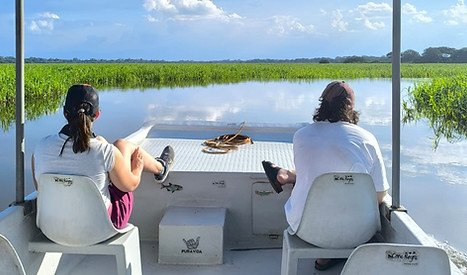
Caño Negro photography adds a wetland chapter to a Costa Rica itinerary. Plan around water conditions, boat arrangements and the subjects present during your visit, then give yourself time to work from a different perspective than a forest trail or mountain viewpoint.
A protected wetland in northern Costa Rica
SINAC’s official Caño Negro guide places the refuge in the lower Río Frío basin near the Nicaraguan border. It describes lagoons, channels and visitor services connected with the local community. This is a landscape shaped by water; the conditions for a particular outing should be confirmed close to the visit.
Caño Negro is also included in SINAC’s internationally designated protected sites. Its wetland setting helps explain why waterbirds, open-water scenes and habitat relationships deserve their own place in a photographic itinerary, rather than being treated as another forest stop.
Plan a photographic boat outing
Before booking, explain the way you want to work. Ask about the boat’s seating arrangement, passenger numbers, shade, equipment storage and whether the outing allows patient observation. A standard sightseeing cruise and a session designed for photography may use time differently.
Discuss how the guide will position the boat while respecting wildlife and other visitors. Movement on water can affect stability and composition, so bring a practical way to keep equipment secure and dry. Avoid assuming that a tripod will be suitable in every vessel.
Compare local services
These profiles are currently associated with the region. Some providers also operate in other destinations; confirm the departure point and exact service being offered. Inclusion is a directory listing, not a ranked recommendation.
Let conditions guide the session
Water levels, access and the activity of wildlife can change what is practical on the day. Ask the operator which route is appropriate for the current conditions and your interests. Build flexibility into your plan rather than treating a previous visitor’s photographs as a promise of the same encounter.
For birds, think beyond a close portrait: reflections, habitat, groups and behavior can create a coherent sequence. Keep enough space in the frame to show the wetland when that helps the story. Our Caño Negro field guide develops practical preparation for this setting.
Stay locally or visit from another base?
The choice depends on the departure point, your preferred pace and the rest of the route. An overnight stay can reduce the need to combine a long transfer with a field session. A day visit may work when the timing and transport are realistic. Compare both arrangements before deciding.
Ask your accommodation or operator about meals, early departures, pickup and the time needed to reach the boat. These details matter more than adding one extra destination to a crowded schedule. Reserve time for equipment care and rest between sessions.
Combine wetland and forest photography
The Boca Tapada directory and Sarapiquí directory provide forest-based comparisons. A multi-destination program should create meaningful habitat contrasts while leaving enough time at each stop. Review our responsible photography guidance before discussing wildlife approaches.
Questions photographers ask
Can the same boat route be used throughout the year?
Do not assume so. Ask the operator about current water conditions and access before confirming the outing.
Are close encounters with birds guaranteed?
No. Wildlife remains free-ranging. Plan for varied subjects and compositions instead of a fixed checklist of photographs.
Is the village the same as the protected refuge?
No. Accommodation and local services, the refuge and the exact boat departure point are different parts of the visit. Confirm each location when planning.