
Ethical Wildlife Photography in Costa Rica: A Practical Guide
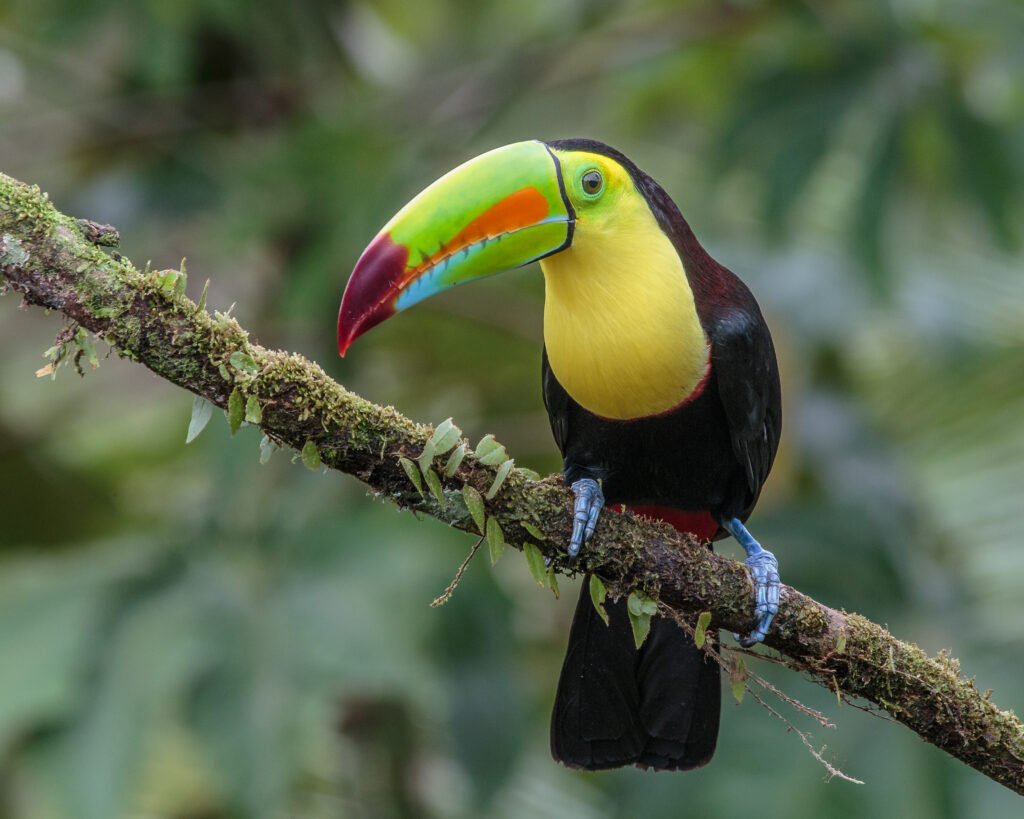
Featured photo: Keel-billed toucan in Costa Rica by Andy Morffew, CC BY 2.0. Resized; thumbnails may be cropped.
Ethical wildlife photography in Costa Rica begins before you raise the camera. The place you choose, the provider’s methods and your response to an animal’s behavior all shape the encounter. The aim is to make photographs while allowing wildlife to continue its normal activity.
Give animals a choice
Use distance and patience instead of moving closer until an animal reacts. Stay on authorized paths and follow the guide’s instructions. If your presence changes the animal’s behavior, move back or end the encounter.
Warning calls, repeated retreat or interrupted feeding are reasons to reassess your position. A quiet subject is not automatically comfortable. Let your guide help interpret the situation and accept that some photographs should be left unmade.
Be especially careful around nests
Nesting animals need space and reliable access to their young. Do not block an approach, clear vegetation or gather a group around a nest. Avoid sharing precise nest locations publicly when that could attract disturbance.
Use a longer lens from a permitted position or choose another subject. Read Audubon’s ethical bird photography guidance for more detail about reducing disturbance. Local reserve rules may impose additional limits.
Ask how a photography experience operates
Before booking, ask whether the experience uses feeding, playback, captive animals or handling. Request clear explanations of animal welfare and the conditions under which a session stops. Do not infer responsible practice from attractive sample images alone.
For feeder-based bird sessions, ask who maintains the equipment and how hygiene is managed. Do not bring your own food, move feeders or use live bait to create a scene. Avoid playback to provoke a response, and respect any stricter policy set by the site.
Leave small subjects where they are
Macro photography can tempt photographers to move an insect or frog onto a cleaner perch. Resist that shortcut. Work with the position the subject has chosen, or photograph something else. Never restrain, chill or otherwise manipulate an animal to make it easier to photograph.
At night, keep light use restrained and follow local guidance. Avoid repeated bright illumination and stop when it appears to disturb a subject. A guide’s participation does not remove your responsibility to assess the method.
Protect the habitat around the frame
Do not cut branches, trample plants or leave a trail to obtain a background. Place supports carefully, keep bags out of vegetation and take all waste with you. Respect private property and access limits even when a subject is visible beyond them.
A wider environmental image can be more informative than a close portrait. Let habitat become part of the photograph instead of treating it as an obstacle to remove.
Caption the image honestly
Describe captive conditions, maintained feeders or other significant assistance when relevant. Avoid implying that a staged encounter represents unassisted behavior in the wild. If you do not know a species or behavior, verify it or use a cautious description.
Editing choices also affect the story. Follow the disclosure rules of any publication or competition you enter and do not describe a heavily altered image as documentary evidence.
Choose providers with clear practices
Use the directory to find guides and experiences, then ask direct questions about their methods. A listing helps you locate a contact; it is not an independent welfare certification. Share your standards before booking so that expectations are clear.
- Will we stay on authorized routes?
- Are animals free-living or captive?
- Is feeding, playback or handling involved?
- How do you respond when a subject is disturbed?
- What limits apply to lighting and group size?
Explore Audubon’s ethics resources and confirm the rules of each reserve you visit. For travel coordination, ask Physis Photo Tours how your photographic priorities and welfare preferences can be incorporated into the route. A successful session respects the animal even when it produces no photograph.